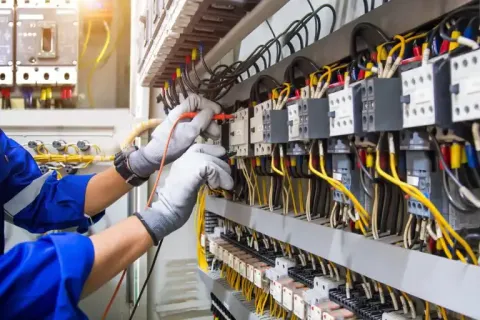
Moderate. While low-voltage speaker wiring might seem simple, the power supply for amplifiers and other active components often requires line voltage (120V) circuits. This necessitates strict adherence to NEC requirements for wiring methods, trenching depths, GFCI protection, and weatherproofing. Professional electrical installation is highly recommended to ensure safety, code compliance, and longevity in DuPage County's climate. Improper installation poses fire and shock hazards.
Installation requires careful adherence to the 2023 NEC, specifically for outdoor and underground wiring, protection against DuPage County's freeze-thaw cycles, and proper grounding. Permitting and inspections by your local municipality are mandatory, adding layers of technical and administrative complexity.
Project Guidelines & Rules
Permits & Planning
3 Rules
Permit Requirement
Your local municipality requires an electrical permit for any new electrical circuit or significant modification to an existing one, especially involving outdoor wiring. Consult your local building department prior to commencement.
Plan Submission
Detailed plans showing conductor type, size, conduit paths, trench depths, power source, and load calculations may be required by your local building department.
Inspections
Rough-in and final electrical inspections will be required by your local building department to ensure compliance with the 2023 NEC and local ordinances.
General Electrical Requirements (2023 NEC)
7 Rules
Protection of Conductors
NEC 300.3(C) and 300.4. All conductors must be protected against physical damage.
Wiring Methods for Outdoor Circuits
NEC Articles 334 (NM Cable not permitted outdoors), 338 (UF cable permitted), 340 (USE cable permitted), 342 (IMC), 344 (RMC), 352 (PVC conduit). All outdoor wiring must be in approved raceways or cables suitable for wet locations.
Wet Locations
NEC 110.11, 300.9. All electrical equipment and wiring in outdoor wet locations must be listed and labeled for such use.
Ground-Fault Circuit-Interrupter (GFCI) Protection
NEC 210.8(A)(3), 210.8(B) (for non-dwelling units). All 120-volt, single-phase, 15- and 20-ampere receptacles installed outdoors shall have GFCI protection. If the sound system requires line voltage, its branch circuit or outlet must be GFCI protected.
Overcurrent Protection
NEC 240.4. Conductors must be protected against overcurrent in accordance with their ampacity.
Disconnecting Means
NEC 422.31. A disconnecting means shall be provided within sight of a permanently connected appliance rated over 300 volt-amperes.
Low-Voltage Wiring (Class 2 and 3)
NEC Article 725. Wiring for sound systems (e.g., speaker wires) often falls under Class 2 or 3 circuits. Proper cable type (e.g., CL2, CL3) must be used, and low-voltage wiring must be separated from power wiring.
Underground Wiring & DuPage Climate Considerations
4 Rules
Minimum Cover Requirements (Direct Burial & Conduit)
NEC 300.5, Table 300.5. Examples: 12 inches for 120V/20A branch circuits with GFCI in nonmetallic conduit; 24 inches for direct buried UF cable; 18 inches for Schedule 40/80 PVC conduit without concrete encasement; 6 inches for RMC or IMC. All depths are from finished grade.
Frost Depth Consideration (DuPage County)
DuPage County regional construction standards dictate a minimum frost depth of 42 inches for foundations and plumbing. While NEC allows shallower depths for electrical conduits, deeper burial (e.g., below the 42" frost line where practical) offers additional protection against ground heave and physical damage, and should be considered for long-term durability, especially in areas prone to vehicle traffic or significant soil disturbance. This helps prevent conduit movement and potential damage to conductors during freeze-thaw cycles.
Location of Underground Installations
NEC 300.5(D). Cables and raceways entering or exiting the ground must be protected from physical damage. Avoid burial under concrete slabs without proper protection or prior planning. Trenching near other utilities must maintain required clearances.
Trenching Safety
OSHA standards for trenching safety should be followed for excavations greater than 5 feet. Always CALL JULIE (811) at least 48 hours prior to digging to identify and mark existing underground utilities.
Enclosures & Equipment Installation
3 Rules
Weather Protection (NEMA Ratings)
NEC 110.28, 314.15. Outdoor enclosures for electrical equipment (e.g., junction boxes, amplifier enclosures, speaker connections) must be listed for wet locations and have appropriate NEMA ratings (e.g., NEMA 3R, 4, 4X) to protect against rain, snow, ice, and dust, suitable for DuPage's climate.
Support and Securing of Equipment
NEC 314.23, 314.29. All boxes and enclosures must be securely fastened. Speakers or other components mounted to structures must be secured to withstand wind loads and vibrations common in the region.
Condensation & Drainage
NEC 300.7(A). Raceways must be sealed to prevent the passage of moisture from one portion of the electrical system to another where temperature differences could cause condensation.
Ancillary Considerations
3 Rules
Illinois Plumbing Code Interaction
The Illinois Plumbing Code (77 Ill. Adm. Code 890) governs water supply, drainage, and waste systems and does not directly apply to electrical sound systems. However, installers must ensure trenching for electrical lines does not compromise existing or future plumbing lines, drainage, or sewer systems. Maintain adequate separation.
Structural Integrity (2024 IRC)
2024 IRC generally covers structural, mechanical, and safety aspects of residential buildings. Any penetrations through walls or attachment of equipment to structures must maintain the structural integrity and weather-resistive barrier of the building, following IRC Chapter 6 and R703 for wall coverings.
Accessibility & Maintenance
NEC 110.26. Sufficient access and working space must be provided and maintained about all electric equipment to permit ready and safe operation and maintenance.