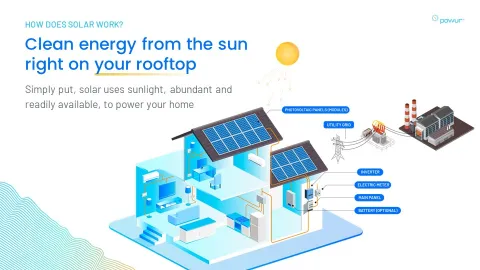
Not Recommended. Due to the inherent electrical and structural safety risks, complex code compliance requirements, and the need for licensed professional involvement for permitting and interconnection, DIY installation is generally not feasible or advised for homeowners.
Residential solar PV installations, while requiring multi-disciplinary code compliance (structural, electrical), are well-defined within the 2024 IRC, 2023 NEC, and local amendments. The primary complexity arises from ensuring all aspects meet safety, structural integrity, and electrical performance standards, requiring detailed plans and professional oversight for permitting and inspection.
Project Guidelines & Rules
General Requirements & Permitting
4 Rules
Obtain necessary permits from your local building department prior to commencement of any work.
2024 IRC R105.1, R106.1
Submit detailed plans including structural calculations, electrical schematics, site plan, and equipment specifications.
2024 IRC R106.1, R106.3
Ensure compliance with all local zoning ordinances and homeowner association (HOA) regulations, if applicable.
Local DuPage County Zoning Ordinances
Secure an interconnection agreement from the local utility provider.
Local Utility Requirements, 2023 NEC 705
Structural Integrity (2024 IRC)
5 Rules
Structural analysis must be performed by an Illinois-licensed professional engineer (PE) to verify the existing roof structure can support the added dead load of the PV array plus DuPage County's prescribed snow and wind loads.
2024 IRC R301.1, R301.2, R324.4
Minimum roof live load for DuPage County, including snow loads, shall be applied per design requirements. Ground snow loads are typically 30-40 psf, which translates to roof snow loads based on roof pitch and exposure.
2024 IRC R301.2.3, ASCE 7 (referenced by IRC)
PV arrays and racking systems must be designed and anchored to resist wind uplift and lateral forces in accordance with DuPage County's basic wind speed and exposure category.
2024 IRC R301.2.1, ASCE 7 (referenced by IRC)
All roof penetrations for mounting hardware and conduits must be properly flashed and sealed to prevent water intrusion.
2024 IRC R905.1.1, R905.2.8.3
Roof covering materials shall have the appropriate fire classification (Class A, B, or C) for the PV module installation.
2024 IRC R902.1
Electrical Systems (2023 NEC)
10 Rules
All conductors and overcurrent protective devices (OCPDs) shall be sized appropriately for continuous operation and protected against physical damage.
2023 NEC 210, 240, 690.8
Proper grounding and bonding of all metallic components, including modules, racking, and conduit systems, is mandatory.
2023 NEC 250, 690.43, 690.47
DC arc-fault circuit interrupter (AFCI) protection is required for PV systems on or integrated into buildings.
2023 NEC 690.11
Rapid shutdown system (RSS) requirements must be met for all PV systems on buildings to allow for controlled shutdown for emergency responders.
2023 NEC 690.12
Clearly identified disconnecting means (AC and DC) must be installed for all PV system components, accessible and within sight.
2023 NEC 690.13, 690.14, 690.15
Clear and permanent field-applied labels and directories are required to identify PV system components, disconnects, and warnings.
2023 NEC 690.53, 690.54, 705.10
Inverters must be installed in a manner that allows for proper ventilation and working clearances.
2023 NEC 110.26, 690.4(B)
Conductors exiting a PV array shall be installed in a raceway or cable suitable for the environment and protected from physical damage.
2023 NEC 690.31, 300.5
Service panel capacity must be verified to accommodate the additional PV backfed breaker without exceeding the panel's busbar rating or utility limits.
2023 NEC 705.12(B)
If energy storage systems (batteries) are included, they must comply with specific installation, ventilation, and fire safety requirements.
2023 NEC 706
Fire Safety (2024 IRC & 2023 NEC)
3 Rules
PV arrays shall be installed to maintain clear access pathways on the roof for fire department personnel.
2024 IRC R324.6
Modules and PV equipment shall be installed in accordance with their listing and fire classification (Type 1, 2, or 3).
2024 IRC R324.5
All PV systems must incorporate a rapid shutdown system as required for emergency operations.
2023 NEC 690.12
Plumbing (Illinois Plumbing Code)
3 Rules
For solar thermal (hot water) systems, all pressure-temperature relief valves must be properly installed and discharged.
Illinois Plumbing Code 407.3, 608.3
Potable water systems connected to solar thermal arrays require proper backflow prevention.
Illinois Plumbing Code 608.1
Piping for solar thermal systems must be appropriately insulated and protected from freezing, given DuPage County's climate.
Illinois Plumbing Code 603.2, 604.4
DuPage County Climate & Durability Standards
4 Rules
All components (modules, racking, wiring) must be rated for outdoor use in extreme temperatures (hot and cold) typical of the DuPage County region.
2023 NEC 110.3(B), 690.4(A)
Ground-mounted PV systems require foundations designed to a minimum frost depth of 42 inches below grade, or as specified by geotechnical report.
2024 IRC R403.1.4.1 (for footings), DuPage County Regional Standard
All materials, particularly fasteners and mounting hardware, shall be corrosion-resistant (e.g., stainless steel, anodized aluminum) to withstand Midwestern weather conditions.
2024 IRC R1004.2 (for chimney supports, general principle)
Flashing, sealants, and weatherproofing details around all roof penetrations must be robust to prevent leaks, especially considering freeze-thaw cycles.
2024 IRC R905